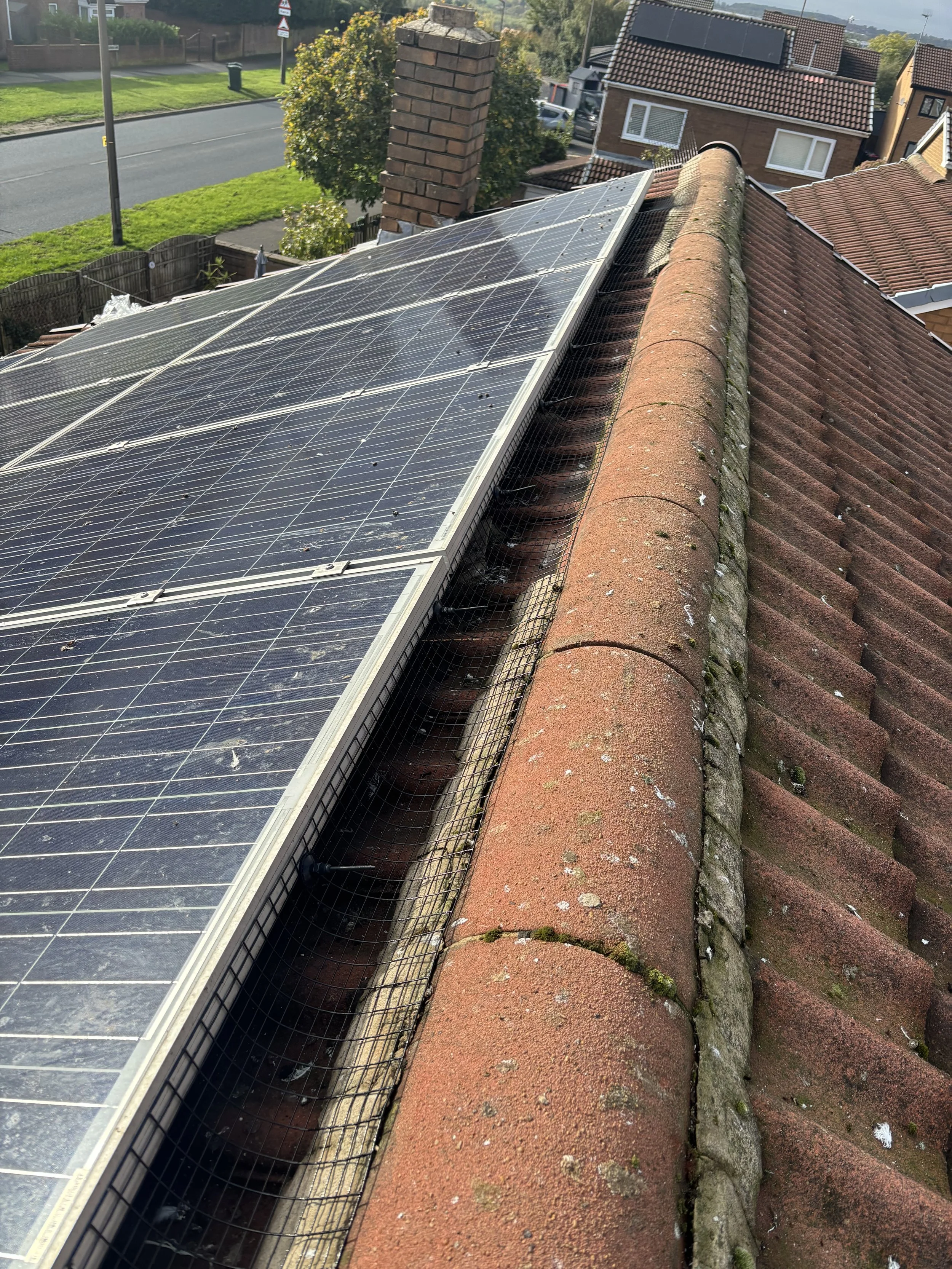
Solar Panels and Bird Proofing: Why Birds Roost Under Solar Panels and the Problems They Can Cause
As solar energy continues to grow in popularity, homeowners are discovering an unexpected challenge that can come with rooftop solar installations: birds nesting and roosting beneath the panels. While solar panels provide significant energy savings and environmental benefits, they can also create an attractive shelter for birds, particularly pigeons.
Understanding why birds are drawn to solar panels and the potential issues they can create can help homeowners protect their investment through effective bird proofing solutions.
Why Birds Like Solar Panels
Solar panels create an ideal environment for birds, especially in urban and suburban areas where natural nesting sites may be limited.
Shelter from the Elements
The gap between the roof and the solar panels forms a protected space that shields birds from rain, wind, and extreme temperatures. This sheltered area provides a safe place to rest and nest throughout the year.
Protection from Predators
The narrow space beneath solar panels offers excellent protection from common predators such as cats, foxes, and birds of prey. Once birds discover these secure spaces, they often return repeatedly and can attract additional birds to the area.
Warmth During Colder Months
Solar panels absorb heat from the sun, creating a warmer microclimate underneath them. During cooler weather, this warmth can make the area particularly attractive for roosting and nesting.
An Elevated Vantage Point
Birds naturally prefer elevated locations where they can observe their surroundings and detect potential threats. Rooftop solar installations provide an ideal perch and resting place.
Common Bird Species Found Under Solar Panels
While various bird species may use solar panel installations, the most common culprits include:
Pigeons
Starlings
Sparrows
Jackdaws
Occasionally gulls in coastal areas
Pigeons are particularly problematic due to their tendency to nest in colonies and return to the same nesting locations year after year.
Problems Caused by Birds Under Solar Panels
Although birds themselves are a natural part of the environment, nesting beneath solar panels can lead to several costly issues.
Reduced Solar Panel Efficiency
Bird droppings can accumulate on the surface of solar panels, blocking sunlight and reducing energy production. Even partial shading caused by droppings can have a noticeable impact on system performance.
Damage to Wiring
Birds often bring nesting materials such as twigs, grass, and debris into the space beneath panels. Some species may also peck at or damage electrical cables. Exposed or damaged wiring can result in system faults and expensive repairs.
Roof and Gutter Blockages
Nest materials can fall into gutters and drainage systems, causing blockages. This can lead to water overflow, damp issues, and potential roof damage over time.
Increased Maintenance Costs
A solar panel system affected by nesting birds often requires:
Professional cleaning
Nest removal
Gutter clearance
Electrical inspections
Repairs to damaged components
These ongoing maintenance expenses can quickly add up.
Health Risks
Bird droppings may contain bacteria, fungi, and parasites that can pose health risks to homeowners and occupants. Large accumulations can also create unpleasant odours around the property.
Noise Disturbance
Nesting colonies, particularly pigeons, can generate significant noise through cooing, movement, and territorial behaviour, especially during breeding season.
Fire Hazards
Dry nesting materials placed around electrical wiring and solar equipment can increase fire risk. Although uncommon, this is a serious concern that should not be ignored.
What Is Solar Panel Bird Proofing?
Solar panel bird proofing involves installing physical barriers around the perimeter of a solar array to prevent birds from accessing the space beneath the panels.
The most common solutions include:
Solar Panel Mesh
A durable, weather-resistant mesh is secured around the edges of the solar panel system. This prevents birds from entering while allowing airflow beneath the panels.
Solar Skirting Systems
Solar skirts provide a neat, aesthetically pleasing barrier around the perimeter of the panels. These systems are becoming increasingly popular due to their appearance and long-term durability.
Bird Spikes
In some situations, bird spikes may be used alongside mesh systems to discourage birds from landing near problem areas.
Benefits of Professional Bird Proofing
Installing bird proofing offers a range of advantages:
Protects solar panel performance
Prevents nesting and roosting
Reduces maintenance costs
Helps avoid cable damage
Improves roof hygiene
Extends the lifespan of the solar installation
Provides long-term peace of mind
When Should Bird Proofing Be Installed?
The best time to install bird proofing is either immediately after a solar panel installation or as soon as signs of bird activity are noticed. Early intervention prevents birds from establishing nesting habits that can be difficult to break.
Common warning signs include:
Birds regularly gathering around panels
Nesting materials visible on the roof
Droppings accumulating on panels or pathways
Scratching or fluttering sounds from the roof space
Conclusion
Solar panels provide an excellent return on investment, but they can unintentionally create the perfect home for birds. What starts as a few birds seeking shelter can quickly lead to reduced solar efficiency, property damage, increased maintenance costs, and potential health concerns.
Professional bird proofing solutions such as solar mesh and perimeter protection systems offer a simple and effective way to keep birds out while maintaining the performance and longevity of your solar installation. By taking preventative action, homeowners can protect both their solar investment and their property for years to come.